Thursday, May 5, 2022

Ode to Floyd


“Floyd Gottfredson was to Mickey Mouse what Carl Barks was to Donald Duck.”

-Talesfromweirdland

For Civil War buffs (like myself), today is the 158th anniversary of the Battle of Wilderness. For Disney comics fans, today is just as pivotal (and less tragic); it is the 117th birthday of Mickey Mouse comics maestro Floyd Gottfredson. If Walt is Mickey’s father, then Floyd is Mickey’s fun uncle or as D23 puts it, “a guardian artist.” In many aspects, Floyd shaped Mickey’s personality more than Walt. It sounds like Disney heresy to the novice, but an overview of Floyd’s career reveals a Mickey Mouse that is more dynamic and rounded than the figure displayed on movie screens.

Floyd’s Mickey battled wannabe world conquerors, dueled air pirates, enlisted in the Foreign Legion, visited an island in the sky, and even saved a country from financial disaster. (Mickey Mouse 2024, anyone?) But it wasn’t just the adventures that placed the comics Mouse apart from his theatrical counterpart. It was how Mickey reasoned and dealt with those problems. He had self-confidence in spades but often bet too much on his heart. He faced overwhelming odds, sometimes panicked but always remained steadfast. He was a symbol of justice without becoming cloying in his dispensation.

A brief biographical sketch of Floyd. Gottfredson was born May 5, 1905, in Utah. A hunting accident injured his arm which like many a tragic accident turned into an unexpected blessing. His injury led to a creative style of drawing, and he had time to read plenty of pulp material that later inspired many Mickey stories. He went out to California and landed a job with the Disney Studios as an in-betweener. Four months later, he was asked by Walt to temporarily take over the Mickey Mouse comic strip. The temporary assignment started on May 5, 1930 and lasted nearly 45 years until his retirement. Gottfredson passed away on July 22, 1986.

Fortunately, Gottfredson was “discovered” in the 1960s by earnest fans and he was properly credited for his accomplishments. Unfortunately, he wasn’t named a Disney Legend until 2003 long after his death. Interestingly enough, as recounted in Malcolm Willis’ interview with Floyd, he considered his earliest Mickey artwork to be archaic compared to his most recent work at the time! However, as recollection of his work grew, he reconnected with his prime material. The series of paintings done reflect this philosophical shift. Every painting was from the pre-1945 serials. Sadly, this meant we missed out on paintings of the Rhyming Man and Milos. Despite that loss, the paintings remain today a beautiful encapsulation of Mickey’s daring perils.

I was fortunate enough to grow up in the late 1990s and the early 2000s when Disney was producing Mickey material unlike previous decades where often the only proof of Mickey’s existence resided at the parks and store shelves. I was delighted by the Mickey Mouse Works cartoons, and I still think Mickey, Donald, Goofy: The Three Musketeers is one of the funniest films ever. Mickey’s segment in Once Upon a Christmas never fails to evoke genuine emotion. Yet for all those renditions of Mickey and the marketing blitz, I was not aware of Mickey Mouse comics. The comic Mickey for young me was as unknown as the New World to a 1345 Bavarian peasant!

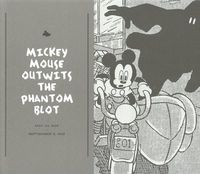
I have recounted my discovery of Gottfredson here. It was a pivotal moment in my Mickey fandom. I found some of Mickey’s greatest adventures. Sure, he, Donald, and Goofy tangled with the Phantom Blot in a fun Mouse Works episode but Mickey Mouse Outwits the Phantom Blot brought chills down my spine with its intensity and tone. It startled me to think that all that material was unrealized and unused by Disney. Fer gosh sakes! Mickey could have a dozen hit movies and shows based off the black ink content. As of 2022, little of Gottfredson’s creation has been showcased via animation.

After uncovering Gottfredson, I noticed pieces of Floyd in the modern animated Mickey, scarps that survived the decades of neglect. In the European comics Mickey, he has never really left. Yes, there have been periods where Mickey has become more sedated and sterner. But thanks to Scarpa, Faraci, Casty, and other artists/writers, he has remained the vibrant heroic figure. And that figure has returned to American shores with the excellent translations/dialogue done by David Gerstein and his Core Four team.

When I write my Mickey Mouse comic scripts, I try to channel Floyd’s Mickey. His bravery in the face of peril. His humanity towards people. His resourcefulness against overwhelming odds. His self-confidence that can border on recklessness but not a distasteful cockiness. His zest for adventure.

The box set of Floyd’s Sunday colors have just been reprinted just in time for the celebration. While the Sundays might not rank up there with his finest work (those tales are mostly located in Volumes 3/4/5 of the Floyd Gottfredson Library), they are absolutely worth the purchase! The link is located here.

I will give Floyd the closing words: “Mickey will always be alive because he is a symbol, the very trademark of the studio, and because of the late Walt Disney’s affection for him. One of the main functions of the comic strip is to keep him alive.”

Thanks to Floyd’s work, both he and Mickey will be forever alive.

Happy Birthday Floyd and thank you!

Wednesday, February 9, 2022

The Secret of the Black Whale

So I recently purchased the volume: The Forgetful Hero in the Disney Masters collection. There is a prime Mickey Mouse story in it: "The Case of the Cut-off Calls." The story is done by Giorgio Cavazzano and it is a masterpiece. (BTW, the whole volume is worth owning. Excellent work and translation.) I don't currently have access to a scanner so I decided to review a Cavazzano story (well, art only) that is available online. Enter "The Secret of the Black Whale" written by Casty, art by Cavazzano, and translated by ? as neither Inducks or comiXology lists a name. 

The set up is pretty typical: Mickey and Goofy are on vacation in Tierra Del Fuego (a name I recognize due to colonizing it in Europa Universalis 3!). Ever notice how Mickey takes more vacations with Goofy than Minnie? Maybe Goofy pays his own way?

The Italian art varies greatly from the Gottfredson/Murry tradition but I dig the vibrant set-up. The energy pops off the page. Just look at this spread:

Mickey and Goofy decide after being cheated during a short taxi ride to check out the marine museum. Mickey mocks the suggestion thinking there won't be anything interesting in it. You would think that Mickey would learn that adventure happens everywhere to him! Ah, the joys of limited continuity. They enter the museum and met Estrella Marina, the curator of the museum, a jovial character, and making her first of four appearances in Mickey comics.  

Marina is all about whales. Which as hobbies go is a solid one. After Mickey overcomes his bout of embarrassment, a little bit of science exposition is given out. If Casty's stories have a lull point, it is usually during the information dumps. They are not bad per say but no one has ever done it as well as Raiders of the Lost Ark. 

Her goal is to decipher what whales and dolphins have to say. As such, it is time for some topical humor: we know what the Miami Dolphins have to say about things! Her goal is gently mocked by the local seaweed farmers. It is a nice touch that the relationship isn't stormily contentious or rooted in gender roles, but basically lighthearted teasing between blue collar workers and their eccentric friend.

Captain Jonah (I got that reference!) explains that he quit whale hunting because Nero the Black Whale arrived and conquered (i.e. destroyed) all the whaling ships while fiddling. OK, the fiddling didn't happen. 

Then the villain of the piece (his appearance gives it away), De Bolt, arrives on the scene. If you ranked Casty's villains, this barnacle is near the bottom. He comes off as more of a rejected Captain Planet villain. Then again, most villains of environmental parables aren't three dimensional characters, but just the living personifications of greed. It is the nature of the genre. Displaying the villains as something more than just lusting moneybags can undercut the green moral. It is simpler to show monetary lust than having a villain with the motivation to offer jobs, has a sympathetic background, trying to balance two worlds, etc. Casty's "The World to Come" handled its environmental story with greater care. 

The next morning discloses that a massive wave (conveyed by some epic art) has raided the town. The seaweed farmers talk about how Nero arrived and left destruction in his wake. Some of the troupe disagree. The farmers in response decide to head for the open seas to find out. They don't allow Marina to come along but she, Mickey, and Goofy sneak aboard. As following in the grand tradition of unsuccessful stowaways, Goofy's sneeze immediately gives them away. 

Captain Jonah threatens to throw them off the ship but Marina calls his bluff. She pulls out her laptop and discovers that the whale songs are irregular. Nero arrives one night and everyone remarks in alarm that Nero could have sunk them but for some reason he didn't. Marina also inquires and Jonah cheekily wonders why she doesn't ask her laptop. 

The crew wakes up the next morning to discover a giant cruise ship with a Nero-sized indent in the side of the hull. 

Marina obtains a photo of Nero to discover that only the whale is huge but it has shark teeth! It is either a new species or the scientists from the Jurassic Park movies have been hired by Sea World. Either way, it is troubling news. Of immediate worry is the rapids that toss the tiny ships around massive icebergs. Fortunately, the story doesn't reenact Titanic (there is a parody idea for the Italian comics!) and the ships emerges to some amazing art. 

Similar to "Mighty Whale Hunter," (of which this story is a spiritual sibling), there is a secret hidden in the icebergs. Cavazzano's work jumps off the pages. 

Jonah decides to reveal the massive secret: Nero is fake news! Once upon a time during an expedition, the seaweed farmers were saved by dolphins and meeting with the whales was enough to make them forsake the business forever. Like many recent converts, they decide to start a jihad on whaling by building a complex fake whale. (Bug's Life homage?) Having sunk all the whaling ships (without any apparent deaths. Impressive luck), they retire to hide Nero. 

Admittedly, this is a bit convenient. I mean, I respect the idea being presented: near death experience leads to conversion. A watery Road of Damascus. And I am certainly no fan of whaling. But I have a hard time believing that hardened seamen would just drop their line of income with nary a complaint and quite frankly their wanton destruction of other whaling ships shouldn't be seen as a positive. Eco-terror is still terror. Destroying other boats was dangerous and illegal. They didn't even give the other whalers a chance to see the light. PETA, eat your hearts out. 

Well, it turns out De Bolt followed the "heroes" to the secret cove. He, of course, immediately goes into Captain Planet villain territory to distract that the "heroes" sunk more boats than Doctor Vulture. (Fortunately for him, Bill Walsh didn't write this tale or he would be marked for a watery grave!) Despite his crew abandoning ship at the sight of Nero, De Bolt pulls a Cutler Beckett/Captain Ahab and chases the mechanical whale. Nero traps him in an ice gully and breaks the ice raining icy death upon the whale hunter. He is fished out of the water by the seaweed farmers.

One final secret is revealed. Nero, for this adventure, was not being controlled by humans but the whales and dolphins. Somehow, they are smart enough (and possess the necessary legs and thumbs) to operate the complicated machinery previously shown. Marina's program reveals that it can translate the words of the whales. Estrella's celebration leads to her knocking the laptop into the icy depths. But it is all good: she found a new way to listen to whales. Mickey and Goofy head out satisfied with another vacation.

Generally, Casty's stories immediately rank in my favorites list and in my reread slots. This story just doesn't. The environmental plot is hackneyed. The villain is a caricature. Mickey and Goofy take a backseat during the action. The whales operating Nero is impossible to swallow. 

It is hard to believe, but "Mighty Whale Hunter" despite being written in the last 1930s does a better job of balancing the ethical issues of whaling and economical reality. Mickey in that story wrestles with trying to ensure the whale is saved while helping his boss. The dynamic heightens the action and reveals the depth of his character. I am supposed to buy that the converted seaweed farmers are good guys as they sink the other whalers' ships just because they saw the light. C.S. Lewis was right again about moral busybodies. Casty's "The World to Come" integrates its environmental theme much better. 

There are some redeeming factors. Marina is a great supporting character. She is vibrant and engaging. Cavazzano's art is fascinating. Casty includes some fun jokes. It is not be the best catch but it isn't a shipwreck. 

One ear up. One ear down.


Wednesday, November 24, 2021

The River of Time

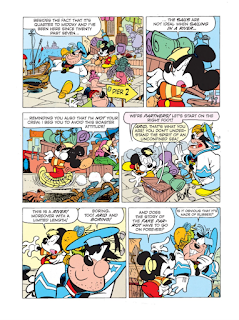
In honor of Mickey's 93rd birthday, I decided to review the Italian classic The River of Time. A direct sequel to "Steamboat Willie," the story has received plenty of kudos for its portrayal of the Mickey/Pete relationship. Written by Francesco Artibani and Tito Faraci with art done by Corrado Mastantuono. Does it live up to the hype of a #154 ranking on Inducks? Follow along as the whistle blows and find out! 


Firstly, the setting itself is of particular interest. While many Mickey comics have been influenced by animation, this is one of the few stories (that I know of) that are directly connected with a short. Now for anyone who has watched "Steamboat Willie," you will realize that this story mostly borrows from the concept and does not continue the plot. Well, not that the short had much plot. In other words, it is creating from whole cloth. Is the tale spun any good? 

From the very beginning, the reader is engaged in the story. It opens with a worker finding the Steamboat Willie's plaque. The scene shifts to Pete invading Mickey's adobe and just chilling out on the couch as Mickey groggily mumbles about home defense. 
 

Which is immediately followed up by this amusing little comedic bit with Mickey insisting to Minnie (on the phone) that he isn't being held hostage by Pete. 


Now I am not an expert on new school Mickey/Pete relationship in some Italian stories but from what I gleamed from various stories and posts is that they are generally portrayed as a friend/enemy type relationship. Which is certainly an interesting take. Since my apprenticeship in Mickey Mouse comics started with Gottfredson and Scarpa where Pete has no moral issues with death threats against the Mouse and his friends, this idea of them having a weird "it is not personal, just business" kinship doesn't cotton well. 

Granted, continuity doesn't really exist in Disney comics outside of specific story arcs but it is hard to knit together 1930s Peg-Leg Pete becoming the modern, friendlier Pete. The same character who gleefully threatened to rain down acid rain in The Delta Dimension and laughed hardily at sending Mickey to his plunging doom in The Mail Pilot seems miles away from the merry joking version seen here. Not to mention, Mickey being nonchalant about Pete breaking into his house. 

The story here makes it work but I would say it works because the relationship was present in "Steamboat Willie" itself. Pete (though not identified as such in the short) is a bully but not a hardened criminal. Coming from the short's world, the reader can understand why Mickey doesn't feel threatened. 

Quick note: the story is peppered with great little details from the animated short. Check out the whistles. 
Mickey agrees to team up with Pete to recover the wreck of the famed steamboat. He heads to the dock to enlist the services of a ship and conveniently reveals the backstory of the wreck. Once again, the event of the short are intermixed with the narrative. Mickey was kicked off the deck so Pete could conspire with his thieving partner Jud Fishbone. The stop at the dock was so Pete could rat out his partner to the local sheriff. 


One thing to note about this story is how sarcastic Mickey can be. It is a dramatic recounting of the climatic crash of the ship and while his captain friend waxed poetic about the event, Mickey refuses to view it in a romantic light. 

This attitude of Mickey continues as he and Pete prepare for their departure. Pete arrives dressed in a cutesy sailor suit saluting the spirit of the sea. Mickey calls out his captainship and mocks the rubber parrot on his shoulder. (Viewers of "Steamboat Willie" will remember the parrot that constantly mocked Mickey.)
Yet once the two reluctant partners set off the journey, Mickey transitions into the happy-go-lucky spirit while Pete reverts into a grump. The strength of each character is on full display. Their actions are within the established parameters. Mickey whistling happily at the wheel is one of the iconic scenes of Disney animation (Disney animated movies use it as their logo) so to see Pete whack him across the head during it is a gentle satire on how different the comics are from animation. 


As Mickey and Pete start a scuffle over the boat, someone watches from shore. This character and his friend will serve as a bit of a pseudo-audience for Mickey and Pete's antics. They offer some commentary as they think it is all an act and not a tense partnership between two enemies seeking resolution for past wrongs. It is the little touches like this that elevates this story beyond the typical Disney comic. Plus the plus as Uncle Walt said. 


Part One ends with the contentious duo reaching Devil's Elbow, the site of the sinking. With the audience sitting on the rocks and the boat in anchor all the players are set for round two. 

Part Two opens with a glorious shot of the sunken Steamboat Willie. The art in this mixes crazy lines and gorgeous scenes to expert effect. It almost feels animated. The kinetic struggle between Mickey and Pete as they jostle like children to see the sunken ship displays character. It is amusing but has gravitas. 

Having established that the ship is below and able to salvage, they decide to delay until the next day. Which means it is time for pathos! With their unknown audience watching, Pete asks Mickey if they ever could have been friends. Now while the silent panels definitely provide a sense of who knows, I must quibble with the idea. 

I don't see how the lawful and upstanding Mickey could be friends with Pete without continuously trying to break him to the side of right. Mickey certainly has patience (see his friendship with Butch in the 1930s and dealing with Goofy on a daily basis) but I cannot see Mickey being OK with thieving. Pete has a rap list a mile long and while he does have a (mostly) stable relationship with Trudy, it is a relationship that shares a mutual interest in crime. If Pete wasn't a thief? Sure, he might be crude and rough but Mickey isn't a surface guy. However, actual crime changes the game. 

Anyway, the touching scene is interrupted by the reality that the deck is on fire. 

Jud Fishbone, Pete's sold out partner, arrives and tricks the motley duo by claiming to be a talent agent and that his prison number is a telephone number. It is interesting how superfluous he feels to the story.


The next day, Pete attempts to raise the Steamboat Willie using the crane attached to the ship. It fails in spectacular fashion much to the amusement of the threesome on the shore especially to the two bumpkins who are still convinced they are watching a play. The red-haired hick plays the role of the Shakespearean Fool by providing wisdom on how a clown is sad between the smile. Pete is dismayed but Mickey showing off his trademarked optimism has an idea. 


Mickey takes a giant tent canvas and places it in the ship. He has Pete pump it up while the entire time he delivers a spiel on the science behind it. You can tell why Mickey and Pete have been dueling for 90+ years. They just have a connection. 

Mickey's idea works to perfection and the duo celebrates their success only for Jud Fishbone to arrive bearing a gun and a determined expression. 

But one page later and he is easily taken down by Mickey (with some assistance from the bumpkins' dog). So on one level, this feels disappointing and anti-climatic. Clearly, any random thief could provide the same action. But Fishbone's appearance is ultimately second to the emotional Mickey-Pete plot. His existence is important to the past actions that led to the sinking of the Steamboat Willie. A lengthy duel would only overshadow that point. 


So everything seems all wrapped up but Mickey suddenly remembers what would have caused the explosion that led to the sinking. Realizing it wasn't his doing, he rushes back to the ship to find Pete fetching a wooden container. 

Having been confronted by the hero, Pete follows proper villain protocol and details his reasoning. It is a bit convoluted and frankly I don't see how sinking the ship was really the best way to hide his theft. But it is Pete and planning has rarely been one of the character's strengths. 


Mickey pieces the rest of it together and realizes Pete needed him to obtain the proper license for salvaging. Pete feeling the conversation complete attempts to leave but Mickey halts him by asking to see what the treasure is. 

They open the container to discover that the hole in the bottom ensured that valuable ruby has probably ended up in the belly of a perch. It is a twist in the grand tradition of Disney comics where the treasure often goes unclaimed by all parties. And the bumpkins are discovered by a butler and they return to a feast at a mansion. 

With the engine down, Mickey and Pete are stuck on the river until the next day. The final page has Pete offering his bag of snacks (a callback to an earlier discussion about Pete's gluttony) and Mickey after slight hesitation takes a handful to end the story on a reflective note. 


Classic stories are classic stories just not for their laughs or plot or art but for the feelings they evoke inside their readers. Disney comics are famous for providing two-dimensional animated characters with three-dimensional personalities. This story among others showcases why the love for the medium has been earned. Mickey isn't just a happy fellow dancing along to a syncopated beat. He feels anger when Pete attempts to pull tricks, guilt when he thinks he was responsible for the Steamboat Willie sinking, he has a sarcastic sense of humor, and drive for justice. Pete is also allowed to experience a full range of emotions. He is lighthearted in his sailor's suit, he is despondent when the level fails to work, and upset when Mickey gives him the cold shoulder. In this story, we are watching two old companions coming to terms with their past. We all have been there even if our experiences didn't involve an iconic steamboat. 

Two ears up! 


Wednesday, October 6, 2021

Top 10 Favorite Mickey Mouse Comics

 In the world of literature, there exists a contention between the categories of best and favorite stories. Today I will share with the reading public, my favorite Mickey Mouse stories out of the oeuvre that I have read thus far. Undoubtedly, this list will change in the future as I devour more and more of the delightful goat cheese that are Mickey Mouse comics.

It is a top 10 list as all the best lists are. And unlike some websites, I will NOT put my selections in a slideshow gallery.

10. Mickey Mouse, Super-Salesman

(Written by Merrill DeMaris. Art by Floyd Gottfredson)

We love Mickey for his triumphant ability to overcome any situation. Despite his small stature, he has beaten down larger opponents and toppled evil regimes. He is the quintessential American underdog. A status cherished in the USA existing largely due to America’s underdog condition against the mighty British Empire.

In most Gottfredson tales, Mickey fights against physical heavies. In this story, he must duel a cocky salesman who doesn’t do his job yet remains at the top. The intro in the FG Library volume expertly describes how in real life those types rarely receive earthly comeuppance, but Mickey does. As someone who had to depart a prized job from his favorite university this story has become even closer to my heart. There might not be justice in the real world but in Mickey’s word, goodness and right win out.

9. Kali’s Nail

(Written and Drawn by Romano Scarpa)

A spiritual sequel/homage to “Outwits,” this mouse tale features everything a reader wants from Mickey and company. An engaging mystery complete with a prototype Scooby Doo villain and Mickey actively searching for the culprit? Put another tune on the record player and let’s dance! Scarpa keeps the plot tight and humming. With an ending that references that another Gottfredson saga “Bellhop Detective” you will quickly realize why Scarpa is held in high regard as a heir of Gottfredson.

8. The Fire Eye of Atlantis

(Written and Drawn by Casty)

Much of the focus on Disney comics in America rests in the vaults of deceased creators. But in Italy, Disney comics are alive and thriving. Casty leads the charge for Mickey Mouse comics. Inspired by Gottfredson and Scarpa, Casty’s Mickey is an adventurous seeker with comedic timing engaging in timeless exploits. In “Fire Eye,” Mickey with friends Goofy and Eurasia Toft travel to Africa to search for the lost city of Atlantis. Along the way they discover a hidden civilization and duel a lieutenant of the Horde of the Violet Hare. Who has a sand submarine! The story features Mickey grinning while chucking a dynamite stick down the hatch. Need I say more?

7. The Seven Ghosts

(Written by Ted Osborne. Art by Floyd Gottfredson)

After returning from the Foreign Legion, Mickey discovers that Mouseton has been haunted by the presence of ghosts! With the entire town in an uproar, Mickey drags along Goofy and Donald to the haunted mansion to solve the case.

Mickey’s character during the mid-1930s was incredibly durable and nimble. He does the heavy lifting of carrying the plot and confronting the villains while dealing with leading his well-meaning but dimmer friends.

6. The World to Come

(Written and Drawn by Casty)

The spiritual sequel to “The Atombrella and the Rhyming Man” was my first non-Gottfredson comic. It immediately grabbed me with its twisting plot and for its rare environment message that acknowledged the dangers of playing almighty with science however how well-meaning the intentions are. Minnie receives a nice starring role. A favorite scene is when she threatens the Rhyming Man about how her boyfriend is big and strong. The final fight is both small and large. Mickey and Minnie directly confront the Rhyming Man while the air force takes on his robotic minions. Just a modern-day classic that never fails to thrill me.

5. Editor-In-Grief

(Written by Ted Osborne. Art by Floyd Gottfredson)

A staple of the later Gottfredson stories and the Murry serials portrayed Mickey as a suburbanite just trying to live a normal life, but crazy adventures kept interrupting his leisure. This story from the 1930s has Mickey attempting to settle down to please Minnie, but his attempts at peaceful living (by running a newspaper) are foiled when he refuses to play protection money to Pete’s gang. While the Mickey of those later stories wouldn’t display vital energy in combating the new threat, this Mickey immediately bangs the drum of war and takes down the whole racket. Despite the passed decades, this story looms more and more important considering how news sources have grown more and more protective of those in power.

4. Race to Death Valley

(Written by Walt Disney and Floyd Gottfredson. Art by Floyd Gottfredson, Jack King, and Win Smith)

It is not the greatest written Mickey comic. In fact, Walt’s sections while exciting could use a sharper script. Mickey’s character is still in flux. But the kinetic energy and thrilling adventures are present. It is the first MM comic that I ever read and for that reason it will always remain in my personal favorite list. Filled with mystery and action-packed set pieces, nearly every Disney comic is a descendant of “Race to Death Valley.” Something beautiful and rare was being born with every daily strip. It all started with mice racing to Death Valley.

3. Darkenblot

(Written by Casty. Art by Lorenzo Pastrovicchio)

An iconic hero requires equally worthy foes. The Phantom Blot has been up to the task since his introduction in the 1930s. In “Darkenblot,” he nearly pulls off a coup that fortunately for the city of Avantgarde, Mickey happens to be stranded in its airport. When people ask me what I think Mickey’s character to be, I think of these stories. Mickey is helpful, courageous, friendly, understanding, and inquisitive. He pushes back when necessary and isn’t afraid to voice controversial theories. And he throws in a few jabs at a fallen foe.

2. Mickey Mouse Outwits the Phantom Blot

(Written by Merrill DeMaris. Art by Floyd Gottfredson)

In many regards, the Phantom Blot’s introductory story is the quintessential Mickey Mouse tale. Filled with suspense, action, death-defying stunts, the chilling caper about Mickey grappling with a phantom theft has served as one of the cornerstones of Mickey Mouse comics. Scarpa famously paid homage to the story’s structure in “Kali’s Nail.” The story launched one of Mickey’s greatest enemies in the Phantom Blot. It is a testimony to the strength of Mickey’s character: the determined detective that never gives up against overwhelming odds.

1. Mickey Mouse Joins the Foreign Legion

(Written by Ted Osborne. Art by Floyd Gottfredson)

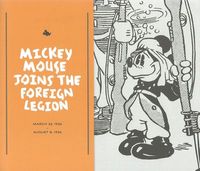
Some stories just grab your interest and remain embedded in your heart and mind. “Foreign Legion” holds that role for me. From the very beginning, Mickey’s character is tested. He is tortured for information that he refuses to divulge despite the noose being fastened around his neck. He is sent to trail Trigger Hawkes to retrieve government files. Using quick thinking, he follows Hawkes into the Foreign Legion where he discovers Peg-Leg Pete has become a sergeant. Outlasting near-death experiences, he foils the villains and brings home the plans. The story concludes with Mickey sharing an adorable scene with Minnie. As Frank Stejano wrote about the story, “proving that any man can be great in the face of adversity if he trusts his potential and his beliefs.”

That is my list of favorite Mickey Mouse comics. List yours in the comment section below!

Wednesday, June 16, 2021

Paul Murry


Paul Murry

Yes, I know I haven’t completed my coverage of the MM Adventures Line but I received the latest Paul Murry Disney Masters volume in the mail and my muse grabbed me by the ears.

Few Mickey Mouse comic creators elicit such divisive opinions as the quiet harmonica playing Paul Murry. Floyd Gottfredson is correctly seen as Mickey’s Second Master (Walt being the first and foremost principal) and modern-day luminaries like Casty are lauded for simultaneously returning Mickey to his roots yet moving him forward. Romana Scarpa is noted for keeping the Gottfredson’s spirit going in the Italian arna as the American Mickey Mouse lapsed into comfortable domesticity. The same safe suburban attitude entrenched Mickey into formulaic straight man roles in the animated shorts. Despite Bill Walsh’s zany and convoluted plots, Mickey steadily devolved from rabid world traveler to 1950s Father Knows Best fussbudget.

However, Paul Murry has a loud and determined fan base. Disney comic expert David Gerstein, curator of the Disney Masters comic line, has repeatedly noted how Murry story requests are the highest among readers feedback. Clearly, he has devotees. Is it all because of childhood nostalgia? Does his work hold up? Is he worthy of the term, “Disney Master?”

One of the most common complaint is that his Mickey lacks spunk. As noted earlier, this didn’t start with Murry but was a holdover from the Gottfredson run and the general malaise that surrounded Mickey’s character in that era. Mickey went from ardent explorer to grand marshal of Disneyland. It is hard to place blame on a freelancer collaborating with an outsourced comic publisher for limiting Mickey’s personality when the studio itself left him languish in bland viability. Murry’s Mickey isn’t that far off from what direction Bill Walsh drove the character. If anything, Murry’s Mickey was prevented from being made the butt of whatever joke struck Walsh’s fancy; character consistency be damned.

Furthermore, Mickey’s drive for justice was still present just understated. He worked at finding out what went wrong. He just wasn’t as vocal. But when he was placed on a case, his desire to solve the case revealed itself in staid tenacity with Goofy providing enough hijinks and laughter for two characters.

That being said, I count myself among the Murry apologists. I like his work, daresay, even enjoy it. It has a simple sentiment and cozy charm that always leaves me content. Is it the most ambitious work? No, and I imagine that leaves it lacking in the eyes of some but if Murry’s work is anything, it is consistent. While Scarpa and later Gottfredson can swing widely from great to utterly confusing like a roller coaster designed by a drunk architect, Murry’s work remained steady as a standing order at the local diner. Not high cuisine but comfort food.

So, head out and collect all the Murry Disney Masters volumes. It is well worth the expense.

Two ears up!

Tuesday, October 27, 2020

Detectives in Disgrace


As October marches on, it is time to look at the third issue of Mickey Mouse Adventures as the Phantom Blot makes his triumphant return in Detectives in Disgrace. Written by Jack Sutter with the plot by Paul Halas. Drawn by Antoni Bancells Pujadas.

The Phantom Blot’s history is murky and mysterious as himself. One of Floyd Gottfredson’s most enduring one shots, he has since become one of Mickey’s tenacious and enduring foes. First appearing in the classic Mickey Outwits the Phantom Blot, he only appeared in reprints of the story before both the Americans and the Italians hit upon the idea of reintroducing him to the Disney comic world in the 1960s thus proving the character’s durability. The Western version often downplayed the Blot’s threatening side in favor of more comedic adventures and tone. Not unsurprisingly since most of Western’s material lean towards the childlike. 

When the Blot is “on,” he truly serves as an inspiring and devoted foe. Some of his best stories like this tale and Darkenblot detail the stories of a determined foe with strategic cunning mixed with personal revenge on the Mouse. He is Mickey’s Machiavellian foe.

The story starts in a basement where a group of master criminals dressed like 1920s gangsters (the classic look) are discussing how to deal with Mickey Mouse and Goofy. Apparently, the dynamic duo has put half of the society in jail! (Mickey should run for office with a record like that!). Hilariously, the suggestions range from dumping them in the river, shooting them, and blowing them up. And then the most dangerous criminal of them all the Phantom Blot arrives to disdainfully turn down some crude methods.


I say hilariously because while the Phantom Blot’s resulting plan is outrageously successful, it is also complicated and convoluted compared to merely pugging Mickey and Dippy Dawg with lead. But it is a Disney comic and because of the guidelines, the suggestion can be made but possibly carried out? Nope. Won’t fly. Parents will be mad! I am not suggesting that mob hits become a basic characteristic of Mickey comics but it is amusing to see how even the most evil villains are forced into these plans. And not even the best stories are immune from it. Mickey Mouse Joins the Foreign Legion (my all-time favorite MM comic) uses this same trope. Trigger Hawkes, Pete’s accomplice, suggests just killing Mickey but Pete, in deference of the standard, vetoes it saying they will get caught. Now, Pete’s caution works in the framework of the story, shooting Mickey would raise suspicion in the Legion but here shooting Mickey and Goofy would be the simplest maneuver. But no, the Phantom Blot wants a smear campaign which fits with his original character.

So the underworld decides to follow old Blotty. And the Blot harkening back to his Gottfredson’s roots leaves a note stating how he will rob the Vandergilt’s Jewelry Shop at 3 pm. Mickey and Goofy set up a trap but the Blot is able to escape and the newspaper article has the Blot promising to rob the Savings Bank next.


Mickey and Goofy capture the Blot but it turns out that they fell for a dummy. The newspaper article mocks Mickey and Goofy while showcasing the Blot’s next challenge. And the Blot in typical grandiose fashion will have a television crew on hand. So Chief O’Hara hatches a plot with as he puts it “real police officers.” Which is pretty amusing considering he usually needs Mickey to catch the special criminals. Man, no respect for the Mouse. Mickey and Goofy are assigned the back door and special walkie-talkies but the Blot is listening in and he makes a slight adjustment to the equipment.


The Blot slips through the air conditioning vents (a classic staple) and uses the walkie-talkie to send out fake instructions to the duo. Thus, Mickey and Goofy drive off to apprehend the villain while the Blot hangs ten on the car. Of course as must be the case in these stories, O’Hara takes what he sees at face value and sees they will have to arrest Mickey Mouse. The Blot jumps off and Mickey and Goofy learn the sad truth. This time, their gaff makes the evening news.


The low rent criminals are all celebrating their gains and petty crimes but the Blot has his eyes set on a bigger prize. Anyway that night at Mickey’s house, he catches a clumsy criminal trying to rob his house. The thief lets a reference slip about robbing Fort Knocks (get it?) and Mickey ponders the possibility. The following day, Mickey and Goofy leave on the train (in the 1990s?) to the delight of the Blot and friends but Mickey and Goofy jump off.


The following morning, the Blot’s crew kidnaps security officers for their uniforms as part of the Fort Knocks swipe but Mickey and Goofy are also there in disguise. (It is now that I am regretting that this spoof on Goldfinger didn’t include gassing some gangsters) but they are caught because their ID cards are fake. But of course, Mickey has a plan for escaping jail. Meanwhile the Blot and cronies have hijacked the gold and ready to blow Fort Knocks. So Mickey in his second Indiana Jones ploy of the series hitches a ride under one of the trucks.


The siren alarms whistle while Mickey is trying to figure out why the convoy is slowing down rather than speeding up. The Blot’s plan is to disguise his vehicles as standard delivery trucks and head to the secret airfield outside of town.

Goofy is unable to hold on much longer and is luckily dumped off near a phone. But Mickey showing that daring and risk disconnects the truck’s fuel line forcing a stoppage. He sneaks into the driver’s seat and guns the engine as the fuel line is reconnected. 


He crashes the truck to barricade the convoy as the Phantom Blot begins to think Mickey is behind the proceedings. Suddenly, the police alerted by Goofy arrive to seize the crowd. But the Blot makes a run for it with Mickey on his tail. He and Mickey have a battle among the rocks which ends in Mickey submerged in the pond and the Blot dashing for his plane. Mickey foils his escape by shoving a massive boulder upon his plane to capture him. And Chief O’Hara, Mickey, and Goofy all share a hearty laugh at the end.


Out of all the stories thus far in the line, this tale was definitely the finest one. Its length (20+ pages) allowed for more development and stronger character moments. The Phantom Blot, when written correctly, is always a fun villain. Mickey was given plenty of active character moments that allowed his inventiveness and resolve to shine through.

Great story.

Two Ears Up!

Next up: Mickey comes face-to-face with the furry version of Kraven the Hunter!

Foray to Mount Fishflake

Welcome to July, Mouseketeers! The summer weather has finally rolled into my area. The type of heat that has one sweat driving in an air-con...