Wednesday, October 6, 2021

Top 10 Favorite Mickey Mouse Comics

 In the world of literature, there exists a contention between the categories of best and favorite stories. Today I will share with the reading public, my favorite Mickey Mouse stories out of the oeuvre that I have read thus far. Undoubtedly, this list will change in the future as I devour more and more of the delightful goat cheese that are Mickey Mouse comics.

It is a top 10 list as all the best lists are. And unlike some websites, I will NOT put my selections in a slideshow gallery.

10. Mickey Mouse, Super-Salesman

(Written by Merrill DeMaris. Art by Floyd Gottfredson)

We love Mickey for his triumphant ability to overcome any situation. Despite his small stature, he has beaten down larger opponents and toppled evil regimes. He is the quintessential American underdog. A status cherished in the USA existing largely due to America’s underdog condition against the mighty British Empire.

In most Gottfredson tales, Mickey fights against physical heavies. In this story, he must duel a cocky salesman who doesn’t do his job yet remains at the top. The intro in the FG Library volume expertly describes how in real life those types rarely receive earthly comeuppance, but Mickey does. As someone who had to depart a prized job from his favorite university this story has become even closer to my heart. There might not be justice in the real world but in Mickey’s word, goodness and right win out.

9. Kali’s Nail

(Written and Drawn by Romano Scarpa)

A spiritual sequel/homage to “Outwits,” this mouse tale features everything a reader wants from Mickey and company. An engaging mystery complete with a prototype Scooby Doo villain and Mickey actively searching for the culprit? Put another tune on the record player and let’s dance! Scarpa keeps the plot tight and humming. With an ending that references that another Gottfredson saga “Bellhop Detective” you will quickly realize why Scarpa is held in high regard as a heir of Gottfredson.

8. The Fire Eye of Atlantis

(Written and Drawn by Casty)

Much of the focus on Disney comics in America rests in the vaults of deceased creators. But in Italy, Disney comics are alive and thriving. Casty leads the charge for Mickey Mouse comics. Inspired by Gottfredson and Scarpa, Casty’s Mickey is an adventurous seeker with comedic timing engaging in timeless exploits. In “Fire Eye,” Mickey with friends Goofy and Eurasia Toft travel to Africa to search for the lost city of Atlantis. Along the way they discover a hidden civilization and duel a lieutenant of the Horde of the Violet Hare. Who has a sand submarine! The story features Mickey grinning while chucking a dynamite stick down the hatch. Need I say more?

7. The Seven Ghosts

(Written by Ted Osborne. Art by Floyd Gottfredson)

After returning from the Foreign Legion, Mickey discovers that Mouseton has been haunted by the presence of ghosts! With the entire town in an uproar, Mickey drags along Goofy and Donald to the haunted mansion to solve the case.

Mickey’s character during the mid-1930s was incredibly durable and nimble. He does the heavy lifting of carrying the plot and confronting the villains while dealing with leading his well-meaning but dimmer friends.

6. The World to Come

(Written and Drawn by Casty)

The spiritual sequel to “The Atombrella and the Rhyming Man” was my first non-Gottfredson comic. It immediately grabbed me with its twisting plot and for its rare environment message that acknowledged the dangers of playing almighty with science however how well-meaning the intentions are. Minnie receives a nice starring role. A favorite scene is when she threatens the Rhyming Man about how her boyfriend is big and strong. The final fight is both small and large. Mickey and Minnie directly confront the Rhyming Man while the air force takes on his robotic minions. Just a modern-day classic that never fails to thrill me.

5. Editor-In-Grief

(Written by Ted Osborne. Art by Floyd Gottfredson)

A staple of the later Gottfredson stories and the Murry serials portrayed Mickey as a suburbanite just trying to live a normal life, but crazy adventures kept interrupting his leisure. This story from the 1930s has Mickey attempting to settle down to please Minnie, but his attempts at peaceful living (by running a newspaper) are foiled when he refuses to play protection money to Pete’s gang. While the Mickey of those later stories wouldn’t display vital energy in combating the new threat, this Mickey immediately bangs the drum of war and takes down the whole racket. Despite the passed decades, this story looms more and more important considering how news sources have grown more and more protective of those in power.

4. Race to Death Valley

(Written by Walt Disney and Floyd Gottfredson. Art by Floyd Gottfredson, Jack King, and Win Smith)

It is not the greatest written Mickey comic. In fact, Walt’s sections while exciting could use a sharper script. Mickey’s character is still in flux. But the kinetic energy and thrilling adventures are present. It is the first MM comic that I ever read and for that reason it will always remain in my personal favorite list. Filled with mystery and action-packed set pieces, nearly every Disney comic is a descendant of “Race to Death Valley.” Something beautiful and rare was being born with every daily strip. It all started with mice racing to Death Valley.

3. Darkenblot

(Written by Casty. Art by Lorenzo Pastrovicchio)

An iconic hero requires equally worthy foes. The Phantom Blot has been up to the task since his introduction in the 1930s. In “Darkenblot,” he nearly pulls off a coup that fortunately for the city of Avantgarde, Mickey happens to be stranded in its airport. When people ask me what I think Mickey’s character to be, I think of these stories. Mickey is helpful, courageous, friendly, understanding, and inquisitive. He pushes back when necessary and isn’t afraid to voice controversial theories. And he throws in a few jabs at a fallen foe.

2. Mickey Mouse Outwits the Phantom Blot
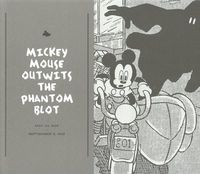
(Written by Merrill DeMaris. Art by Floyd Gottfredson)

In many regards, the Phantom Blot’s introductory story is the quintessential Mickey Mouse tale. Filled with suspense, action, death-defying stunts, the chilling caper about Mickey grappling with a phantom theft has served as one of the cornerstones of Mickey Mouse comics. Scarpa famously paid homage to the story’s structure in “Kali’s Nail.” The story launched one of Mickey’s greatest enemies in the Phantom Blot. It is a testimony to the strength of Mickey’s character: the determined detective that never gives up against overwhelming odds.

1. Mickey Mouse Joins the Foreign Legion
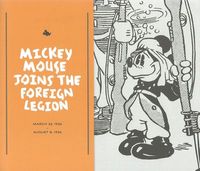
(Written by Ted Osborne. Art by Floyd Gottfredson)

Some stories just grab your interest and remain embedded in your heart and mind. “Foreign Legion” holds that role for me. From the very beginning, Mickey’s character is tested. He is tortured for information that he refuses to divulge despite the noose being fastened around his neck. He is sent to trail Trigger Hawkes to retrieve government files. Using quick thinking, he follows Hawkes into the Foreign Legion where he discovers Peg-Leg Pete has become a sergeant. Outlasting near-death experiences, he foils the villains and brings home the plans. The story concludes with Mickey sharing an adorable scene with Minnie. As Frank Stejano wrote about the story, “proving that any man can be great in the face of adversity if he trusts his potential and his beliefs.”

That is my list of favorite Mickey Mouse comics. List yours in the comment section below!

Wednesday, June 16, 2021

Paul Murry


Paul Murry

Yes, I know I haven’t completed my coverage of the MM Adventures Line but I received the latest Paul Murry Disney Masters volume in the mail and my muse grabbed me by the ears.

Few Mickey Mouse comic creators elicit such divisive opinions as the quiet harmonica playing Paul Murry. Floyd Gottfredson is correctly seen as Mickey’s Second Master (Walt being the first and foremost principal) and modern-day luminaries like Casty are lauded for simultaneously returning Mickey to his roots yet moving him forward. Romana Scarpa is noted for keeping the Gottfredson’s spirit going in the Italian arna as the American Mickey Mouse lapsed into comfortable domesticity. The same safe suburban attitude entrenched Mickey into formulaic straight man roles in the animated shorts. Despite Bill Walsh’s zany and convoluted plots, Mickey steadily devolved from rabid world traveler to 1950s Father Knows Best fussbudget.

However, Paul Murry has a loud and determined fan base. Disney comic expert David Gerstein, curator of the Disney Masters comic line, has repeatedly noted how Murry story requests are the highest among readers feedback. Clearly, he has devotees. Is it all because of childhood nostalgia? Does his work hold up? Is he worthy of the term, “Disney Master?”

One of the most common complaint is that his Mickey lacks spunk. As noted earlier, this didn’t start with Murry but was a holdover from the Gottfredson run and the general malaise that surrounded Mickey’s character in that era. Mickey went from ardent explorer to grand marshal of Disneyland. It is hard to place blame on a freelancer collaborating with an outsourced comic publisher for limiting Mickey’s personality when the studio itself left him languish in bland viability. Murry’s Mickey isn’t that far off from what direction Bill Walsh drove the character. If anything, Murry’s Mickey was prevented from being made the butt of whatever joke struck Walsh’s fancy; character consistency be damned.

Furthermore, Mickey’s drive for justice was still present just understated. He worked at finding out what went wrong. He just wasn’t as vocal. But when he was placed on a case, his desire to solve the case revealed itself in staid tenacity with Goofy providing enough hijinks and laughter for two characters.

That being said, I count myself among the Murry apologists. I like his work, daresay, even enjoy it. It has a simple sentiment and cozy charm that always leaves me content. Is it the most ambitious work? No, and I imagine that leaves it lacking in the eyes of some but if Murry’s work is anything, it is consistent. While Scarpa and later Gottfredson can swing widely from great to utterly confusing like a roller coaster designed by a drunk architect, Murry’s work remained steady as a standing order at the local diner. Not high cuisine but comfort food.

So, head out and collect all the Murry Disney Masters volumes. It is well worth the expense.

Two ears up!

Tuesday, October 27, 2020

Detectives in Disgrace


As October marches on, it is time to look at the third issue of Mickey Mouse Adventures as the Phantom Blot makes his triumphant return in Detectives in Disgrace. Written by Jack Sutter with the plot by Paul Halas. Drawn by Antoni Bancells Pujadas.

The Phantom Blot’s history is murky and mysterious as himself. One of Floyd Gottfredson’s most enduring one shots, he has since become one of Mickey’s tenacious and enduring foes. First appearing in the classic Mickey Outwits the Phantom Blot, he only appeared in reprints of the story before both the Americans and the Italians hit upon the idea of reintroducing him to the Disney comic world in the 1960s thus proving the character’s durability. The Western version often downplayed the Blot’s threatening side in favor of more comedic adventures and tone. Not unsurprisingly since most of Western’s material lean towards the childlike. 

When the Blot is “on,” he truly serves as an inspiring and devoted foe. Some of his best stories like this tale and Darkenblot detail the stories of a determined foe with strategic cunning mixed with personal revenge on the Mouse. He is Mickey’s Machiavellian foe.

The story starts in a basement where a group of master criminals dressed like 1920s gangsters (the classic look) are discussing how to deal with Mickey Mouse and Goofy. Apparently, the dynamic duo has put half of the society in jail! (Mickey should run for office with a record like that!). Hilariously, the suggestions range from dumping them in the river, shooting them, and blowing them up. And then the most dangerous criminal of them all the Phantom Blot arrives to disdainfully turn down some crude methods.


I say hilariously because while the Phantom Blot’s resulting plan is outrageously successful, it is also complicated and convoluted compared to merely pugging Mickey and Dippy Dawg with lead. But it is a Disney comic and because of the guidelines, the suggestion can be made but possibly carried out? Nope. Won’t fly. Parents will be mad! I am not suggesting that mob hits become a basic characteristic of Mickey comics but it is amusing to see how even the most evil villains are forced into these plans. And not even the best stories are immune from it. Mickey Mouse Joins the Foreign Legion (my all-time favorite MM comic) uses this same trope. Trigger Hawkes, Pete’s accomplice, suggests just killing Mickey but Pete, in deference of the standard, vetoes it saying they will get caught. Now, Pete’s caution works in the framework of the story, shooting Mickey would raise suspicion in the Legion but here shooting Mickey and Goofy would be the simplest maneuver. But no, the Phantom Blot wants a smear campaign which fits with his original character.

So the underworld decides to follow old Blotty. And the Blot harkening back to his Gottfredson’s roots leaves a note stating how he will rob the Vandergilt’s Jewelry Shop at 3 pm. Mickey and Goofy set up a trap but the Blot is able to escape and the newspaper article has the Blot promising to rob the Savings Bank next.


Mickey and Goofy capture the Blot but it turns out that they fell for a dummy. The newspaper article mocks Mickey and Goofy while showcasing the Blot’s next challenge. And the Blot in typical grandiose fashion will have a television crew on hand. So Chief O’Hara hatches a plot with as he puts it “real police officers.” Which is pretty amusing considering he usually needs Mickey to catch the special criminals. Man, no respect for the Mouse. Mickey and Goofy are assigned the back door and special walkie-talkies but the Blot is listening in and he makes a slight adjustment to the equipment.


The Blot slips through the air conditioning vents (a classic staple) and uses the walkie-talkie to send out fake instructions to the duo. Thus, Mickey and Goofy drive off to apprehend the villain while the Blot hangs ten on the car. Of course as must be the case in these stories, O’Hara takes what he sees at face value and sees they will have to arrest Mickey Mouse. The Blot jumps off and Mickey and Goofy learn the sad truth. This time, their gaff makes the evening news.


The low rent criminals are all celebrating their gains and petty crimes but the Blot has his eyes set on a bigger prize. Anyway that night at Mickey’s house, he catches a clumsy criminal trying to rob his house. The thief lets a reference slip about robbing Fort Knocks (get it?) and Mickey ponders the possibility. The following day, Mickey and Goofy leave on the train (in the 1990s?) to the delight of the Blot and friends but Mickey and Goofy jump off.


The following morning, the Blot’s crew kidnaps security officers for their uniforms as part of the Fort Knocks swipe but Mickey and Goofy are also there in disguise. (It is now that I am regretting that this spoof on Goldfinger didn’t include gassing some gangsters) but they are caught because their ID cards are fake. But of course, Mickey has a plan for escaping jail. Meanwhile the Blot and cronies have hijacked the gold and ready to blow Fort Knocks. So Mickey in his second Indiana Jones ploy of the series hitches a ride under one of the trucks.


The siren alarms whistle while Mickey is trying to figure out why the convoy is slowing down rather than speeding up. The Blot’s plan is to disguise his vehicles as standard delivery trucks and head to the secret airfield outside of town.

Goofy is unable to hold on much longer and is luckily dumped off near a phone. But Mickey showing that daring and risk disconnects the truck’s fuel line forcing a stoppage. He sneaks into the driver’s seat and guns the engine as the fuel line is reconnected. 


He crashes the truck to barricade the convoy as the Phantom Blot begins to think Mickey is behind the proceedings. Suddenly, the police alerted by Goofy arrive to seize the crowd. But the Blot makes a run for it with Mickey on his tail. He and Mickey have a battle among the rocks which ends in Mickey submerged in the pond and the Blot dashing for his plane. Mickey foils his escape by shoving a massive boulder upon his plane to capture him. And Chief O’Hara, Mickey, and Goofy all share a hearty laugh at the end.


Out of all the stories thus far in the line, this tale was definitely the finest one. Its length (20+ pages) allowed for more development and stronger character moments. The Phantom Blot, when written correctly, is always a fun villain. Mickey was given plenty of active character moments that allowed his inventiveness and resolve to shine through.

Great story.

Two Ears Up!

Next up: Mickey comes face-to-face with the furry version of Kraven the Hunter!

Sunday, August 23, 2020

The Riddle of the Runaway Sphinx


Today’s story is “The Riddle of the Runaway Sphinx.” Written by Michael T. Gilbert and drawn by Stephen DeStefano.

David Gerstein in his landmark essay on Disney Comics, “Disney Comics Back to Long Ago” mentioned this tale as a memorable entity. I won’t dispute his judgment. It is certainly a striking story. But first some background musings.   

One striking aspect of these early headliner stories is the exotic locales. First, Venice, and now Egypt has made Mickey into the mouse version of Tintin. It is not a far departure from the Gottfredson strip. Mickey in his serials travelled to the deepest jungles of Africa, ventured into fictional Middle Eastern principalities, and sailed across the seven seas. The Adventures line clearly wanted to make sure readers understood that life was thrilling for Mickey.  So why does this raise a nagging question?

The question of finances regarding a funny animal comic might be digging deeper than the artist/writer intended. Obviously, the first missile would be: It is a comic meant for children. Quit seeing something in nothing. Sometimes the curtains are just blue. As a former English major, it might be surprising to hear that I, at times, find the need to overanalyze to be a flaw of the discipline. Yet, it is worth asking: do Mickey’s finance matter to the story? And, by extension, his character and the understanding of said persona.

As for this story; no, finances don’t matter. Mickey and Goofy are in Egypt. Period. None of the postcards are available for purchase so a large bank account can’t buy nonexistence. Goofy has no problem buying the barrels of oil so some level of finance is bankrolling the trip. The story doesn’t need explanation to work.

The answer regarding his finance is complicated by Mickey’s Meta existence. We know Mickey as the leader of a corporation, no, a conglomerate. The term, the Mouse, is regularly used as a euphemism for Disney itself. He is known for good cheer, expensive tickets, and copious merchandise (of which I have purchased much). The concept that Mickey could be middle class or even poor seems artificial. Yes, the comic and actor Mickey are separate from the park Mickey (though there has been overlap from his birth) but the Mickey that loses everything in the stock market (an event in the 1930s­) and has to become a plumber’s helper seems hard to swallow in 2020. The Three Musketeers movie has Mickey, Donald, and Goofy as poor janitors but it is a light satire piece, clearly inspired by the concept of the trio as paid actors. We know each Mickey exists in their own universe but we also consume all the Mickeys.

Mickey is universally described as a cheerful, determined, underdog. Gottfredson viewed him, “as a Chaplin Mouse against the world.” Financial security might cut away at that image. Unlike Scrooge McDuck, whose personality of being smarter than the smarties, makes up for his Croesus wealth, Mickey’s persona is more personable. Like Walt, he started as a farm boy who made it big in the big city yet kept his homespun values. Does Mickey having money change his basic appeal? I don’t think so. Mickey’s best stories, be them animated or comic, come from the tales that emphasize his best qualities of goodness and perseverance.

However, it is not like mentioning of finances is necessary for an adventure. The Sacred Jewel has Mickey borrowing a blimp from Captain Doberman on the basis of friendship. Plenty of adventures have Mickey exploring on behalf of a professor. Ultimately, it might be window dressing more than anything. But it is true that The Plumber’s Helper and The Monarch of Medioka have their plots launched by Mickey’s financial situation. In the long run, it is more imperative to have a great story but conversation is always entertaining.

Phew. I spent plenty of words discussing a relatively innocuous question. Onto the review!

The story starts with a panel in the shape of a postcard. Clever idea. Apparently, Minnie Mouse lives at 271 Sunshine Lane in Mouseton. (Time to send prank magazines!) Mickey and Goofy stop at a stand so Mickey can fulfill his promise to Minnie by buying a postcard. As he is doing that, Mickey asks Goofy to fill up the gas tank. The souvenir merchant charges $100 for a postcard due to supply and demand but explains Mr. Pettigreed charges much more. (You know with a last name like Pettigreed, I think a person has to become a villain. What chance do they have to be a hero?)

As Mickey ponders why a postcard tycoon needs machinery parts, Goofy proudly shows off the multiple barrels of oil he purchased. (Mickey, you have no one but yourself to blame. You know how Goofy operates). Mickey grumbles that he couldn’t buy a postcard and as they head over the sand dune, they come to the title page and the realization that someone stole the Sphinx! (Napoleon in legend only shot off the nose!)

By the way, the title page with the missing Sphinx is great art. The story is full of awesome artistry.

Mickey and Goofy drive up to see what it is happening only to run into a boastful detective whose design is Goofy with a mustache. In the grand Disney comics traditions of useless but egotistical law enforcement, the Great Inspector Ghufu can barely keep track of his magnifying glass much less find one of the world’s most famous landmarks. Mickey knowing this showcases his trademark determination to solve the crime.

Driving across the desert, they come across tire tracks and follow them to a suspicious glass bubble where our villains await: Pig-faced Pettigreed and the two-headed Doctor Doublecross (I love names in Disney comics). It turns out Pettigreed hired the mad doctor(s?) to steal the Sphinx. Why? Because apparently Pettigreed is pulling a Scrooge McDuck plot from “Lost Beneath the Sea” and collecting famous monuments to stash on a secret island to create his own national monument park.

Now I probably don’t need to explain how this wouldn’t work. Ignoring the obvious aspect that swiping such monuments as the Sphinx, the Statue of Library, the Eiffel Tower etc are nearly impossible but how will a tourist park work? I can buy the concept if he were to keep the island private but his mural displays a typical family enjoying the sites. He clearly wants to make a profit. His dialogue of “Early on, I learned that monopolies make the most money so I decided to create my own monopoly” suggests he isn’t in this for the art but the desire for cold hard cash. Hey, I am a big capitalist but I also know that stealing and displaying national monuments is not a sound business plan. Eventually, the powers to be are going to arrest him. On one level, I love his zany the plan is. It is Silver Age nonsense which is always enjoyable but when you play it straight, it tends to raise questions. I think it probably would have been better if Pettigreed was cut and Dr. Doublecross just stole the Sphinx for the science. But hey if you are going to be a villain, be memorable.

Speaking of Dr. Doublecross, the Disney comics editors actually try to keep their identity a mystery but any reader of Gottfredson work know the two-handed monster is Professor Doublex and Professor Ecks from the classic “Blaggard Castle.” I do appreciate the aura summoned by the editors in their attempt at playing naïve. The fused together duo are the best part of the story. Both heads have egos larger than the Sphinx and their bickering is just great especially as Pettigreed tries to halt it in vain.

Their route to fisticuffs runs into a roadblock as Mickey and Goofy crash the party in an epic entrance. I can only imagine how awesome this scene would be in animation. Dr. Doublecross reacts quickly enough hitting the start button that reveals the glass bubble is the control hub up top of the Sphinx which now has off road capabilities. 

Mickey and Goofy retreat to the jeep as Mickey takes the wheel (Steamboat Willie!) with the mobile Sphinx hot on their tail. That is what happens when you give the wrong answer to the Sphinx’s riddle.

Mickey realizes that Goofy’s extravagant purchase might actually prove useful and orders Goofy to reenact the Amoco Cadiz oil spill. As per the Law of Comedic Timing, the mechanical legs prove fruitlessly against the slippery power of black gold and comes to a crashing halt.

The authorities arrive to wrap up everything and, of course, Inspector Ghufu proves to be an Egyptian Casey and takes all the credit. Mickey is offered anything as a reward and settles for a postcard which he sends to Minnie and the comic ends on a sweet note with the recipient receiving the item.

Gerstein was right. It is one of the more memorable tales in the line all thanks to the artwork and the writing working well together. Really, there are only two quibbles. 1. The length is much too short. 12 pages is not enough. Give the story about 10 more pages with more room to breathe and I think the story doesn’t feel as rushed; it basically goes missing sphinx, villain exposition, chase, and resolution in the space of 5-6 pages. The Inspector is basically wasted. He appears once at the beginning and then just disappears until the end. His giant ego while hilarious doesn’t add anything. He doesn’t hinder the investigation or bring anything to the table. 2. Pettigreed is superfluous and as previously explained his plan makes little logical sense. Dr. Doublecross drives the action (pun intended) figuratively and literally. The doctors in Blaggard Castle did all kinds of crazy experiments just for the science. Why not just have them steal the Sphinx because they can/wanted to drive a new invention? Yeah, Pettigreed buying up all the postcards gets the ball rolling but you can still have another motivation to lure Mickey and Goofy to the missing sphinx.

Still, it is a fun story. Final rating: 1 ¾ Ears Up!

Next Up: An arch-villain seemingly triumphs in Mouseton!

Sunday, August 16, 2020

The Phantom Gondolier

 By the time the 1990s rolled around, Mickey Mouse’s media presence had long been stuffed in the nostalgic box. His last regular theatrical short, The Simple Things, was released in 1953. He did return in 1983 in his delightful version of Dickens’ The Christmas Carol playing Bob Cratchit. Outside of those shorts, The Mickey Mouse Club reruns, and occasional novelty stabs (Disco Mickey!), he was mostly known for his role as maestro of the Disney Parks. Granted, it was a prestigious role but a limited one that restricted his character to a perpetual happy-go-lucky band leader who ran the show while his colorful co-stars stole the show.

But somewhere the Disney Company must have realized that they were letting their icon fade away. Because the late 1980s witnessed a rash of Mickey Mouse related projects. He appeared in a memorable cameo with rival Bugs Bunny in the classic hybrid film Who Framed Roger Rabbit. Notably, Mickey reverts back to his mischievous personality of early shorts. He willingly participates with Bugs in playing a prank on a free-falling Eddie Valiant. Mickey’s chuckle, usually reassuring, sounds mocking as Valiant becoming a victim.

The 1990 short, The Prince and the Pauper featured Mickey in a dual role. Based off the famous Mark Twain story, both Mickey and his doppelganger the Prince provide excellent examples of Mickey’s character. Mickey (as the pauper) is good-hearted and determined. Repeatedly bullied and financially insolvent, he keeps his spirits high as he encounters every challenge. The Prince is fun loving and irreverent referencing Mickey’s utero status. No sense of responsibility is had until the end of the short. Mickey’s three dimensional personality and history is broken into two distinct characters with great success.

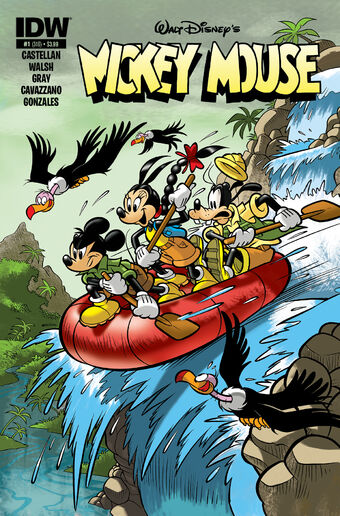
But the animated arena wasn’t the only area where old school Mickey returned. Disney Comics launched in 1990 and along with it the Mickey Mouse Adventures line. From the very first cover (pictured below), Mickey’s adventurous side was emphasized. This was no bourgeois Mouse; Mickey was ready and willing to engage in action. Instead of wanting to be left alone and reluctantly engaging in action, Mickey willingly confronted it for 18 issues. He was the 1930s Gottfredson Mickey returned with a modern design.

(The story actually takes place at night. Covers Always Lie)

I recently found the entire line for sale on eBay and paid a mere $24 for the whole collection. I consider it the best deal since the Dutch purchased Manhattan (historical joke #1 of the blog. Expect more). Of course, the English (Joke #2) and then the Muppets took it. Having read through the entire series, I consider it a highlight among Mickey’s stories but with some caveats which will be explored.

But enough about the entire line. Let’s start with the first story in the first issue; The Phantom Gondolier written by Michael T. Gilbert. (Author note: I will be only reviewing the cover story in each issue).

Firstly, let’s consider the title. Right off the bat, it immediately draws a connection to archrival The Phantom Blot. A heady comparison indeed. The Blot has become one of Mickey’s greatest adversities. The Gondolier, on the other hand according to INDUCKS, has not reappeared since this tale. Perhaps, someone needs to wear a necklace?

The story itself doesn’t waste time getting into the action which isn’t surprising considering the narrative only has 12 pages. There is no time for Bill Walsh or Scarpa meandering. But there is a glorious shot of Venice. That’s right, kiddies. We are outside Mouseton. Mickey isn’t restricted to solving cases for an inept Chief O’Hara. Right on the first page, we have Mickey worried about the cats trying to swipe the Italian sausage but this isn’t a peevish Murry era Mickey. He gathers himself while paying for flowers and dropping a fourth wall glance. This Mickey is mature enough for romance but young enough to be haughty.

Quickly, Minnie puts on the necklace, a large woman explains the tale of the Phantom Gondolier, and the ghost himself arrives to claim his bride. Within three pages, the action is already set up. The story doesn’t mess around.

Let’s chat about the villain himself. His design is exceptional. Ghostly but with a touch of human. The mustache is a nice embellishment. His whole gimmick of using music to lure his victims reminds one of the Pied Piper. It is not the most original concept but it hits the right notes.

After Minnie is musically lured away, the entire backstory is revealed. Mickey has to rescue Minnie by midnight (because 1 am apparently is too mundane) and the lady, Signora Rosa Di Mousini (gotta love Disney comic names) explains that the Phantom Gondolier, once a great musician, gifted the necklace to her ancestor named Elizabeta. 

And by magician, they mean real magic. An interesting take considering the supernatural was often debunked in classic Mickey tales. Before Scooby Doo, the Mouse was ousting hoax artists. But here, the supernatural is played straight.

Anyway, the father of her ancestor orders him arrested for daring to join the nobility (this is how revolutions are started, people). So the Gondolier thinks Minnie is Elizabeta despite Minnie being two feet shorter than the maiden in question. Minnie tries to tell the love-struck ghost he is wrong but his logic, “You wear the necklace I gave you. Therefore you are my Elizabeta even if you look different” prevents any chance of her walking away. 

Mickey (having recently watched Indiana Jones and the Last Crusade seizes a boat and chases the ghost version of Dante across the canals.


The Gondolier decides to play his magic flute (risking a lawsuit from Mozart) and sends seaweed after the Mice. Mickey displaying his textbook cleverness turns the seaweed into a lasso to swipe Ghost Petrarch’s instrument away (this doesn’t happen if he plays a tuba). The Phantom jumps on the boat as the clock counts down to the final minute. 


Mickey throws the flute straight into the water (90s Mickey is edgy), the clock strikes twelve (Cinderella heads home), the ghost fades away, and the necklace snaps off. Mickey decides to repeat his littering and chucks the necklace into the canal wagering that Di Mousini won’t mind and the whole story ends on a corny but funny joke.

The verdict? Well, props to the writer and editor for allowing the supernatural to exist. No cop-out. Mickey straight up dueled a ghost and won. That is how you launch a line. No Scratch Johnson behind an outfit. He vanquished the ethereal. Secondly, Mickey, as a character, rocked. He was bold, determined, and most importantly, he won because of his efforts. There was no lame luck or the villain tripping over his oar. Sure, the Gondolier isn’t the most dynamic character but he plays his role with a flourish. Besides, this whole tale is about establishing Mickey as a hero. It is a crackerjack start to the line.

Two Ears Up!

Next Up: Mickey and Goofy are in Egypt as a dastardly duo steal the Sphinx.

Monday, August 10, 2020

Introduction (Mickey and Me)


Mickey Mouse conjures up a variety of thoughts for people. For many, he is a corporate icon. More mechanized merchandise than actual character. John Kricfalusi famously labeled him, “the ultimate bland character.” He has been satirized by internet comedians as the Simon Pure of flavorless character. While most of those criticisms deal directly with his animated persona, the same charge could be leveled against his comic book/strip antics. Paul Murry’s version, for all his nostalgic fans, has come under fire for limiting Mickey’s personality. While that charge will be considered in due time, the effects have lingered.

But who is Mickey? Is he a Crème of Wheat character or is he still, as Sergei Eisenstein put it, “America’s most original contribution to culture.” This question is what I am going to explore as I review comic stories from Gottfredson to Casty.

The comic Mickey has been praised for keeping his original sense of adventure and excitement that was generally whittled away in the animated shorts. The animated Mickey by the early 1940s played second fiddle to Donald Duck, Goofy, and even his own dog Pluto. By the mid-1950s, he disappeared from the screen. However, in comics, the gritty Mickey survived in comic books courtesy of American and Italian authors. As time moved on, generally, that Mickey became more and more sedentary entrapped in routine detective stories. A revival was soon at hand. European artists, once again, resurrected the Gottfredson Mickey; a bold and determined spirit. The Mickey Mouse Adventures line in the early 1990s gave America back a Mouse driven by action. As we enter into 2020 and beyond, that version of Mickey continues to flourish. Retro merchandise campaigns by the Disney Company have returned the old Mickey to the forefront.


My journey with Mickey Mouse, like many, started as a young child. My family travelled to Walt Disney World nearly every year of my childhood. As such, my brothers and I quickly gravitated to certain characters. Myself to Mickey. The middle brother to Pooh and the youngest brother to Pluto. But I only knew of the animated and park Mickey; usually cast in the role of a cheerful maestro of ceremonies. House of Mouse provided glimpses of a mischievous Mickey and the various animated specials; Once Upon a Christmas and The Three Musketeers gave further peaks into a deeper character. Fantasmic, the fantastic park spectacular, featured a besieged Mickey who bravely fought back against a legion of Disney villains.

It wasn’t until I discovered the Fantagraphs Volume One of Floyd Gottfredson’s comics that I learned about the comic strip Mickey. I was on a NYLC trip to Washington DC. A group of us visited the Library of Congress and in the gift shop the volume was for sell. Immediately intrigued, I purchased the volume without looking at the price tag (a rarity for my thrifty soul) and dug in with fervor. I was instantly charmed. The Mickey Mouse present engaged in fast-paced adventures carrying a gun! His perils were swift and merciless. They ranged from desert treasure hunts to domestic troubles to a boxing match. This Mickey didn’t sit back and let others take point. No, he seized the momentum and moved forward.

As such, the Fantagraphs volumes were added to the wish-list. I started digging even more and discovered a whole world that I never knew existed, of a Mickey Mouse I never knew existed. My comic collection grows yearly. The Disney Masters series has introduced me to Paul Murry, Roman Scarpa, and the Ice Sword Saga. As my knowledge of Mickey Mouse comics grows, I will share my insights with others.

 As Walt Disney famously said, "Mickey speaks to that deathless, precious, ageless, absolutely primitive remnant of something in every world-racked human being.”


Foray to Mount Fishflake

Welcome to July, Mouseketeers! The summer weather has finally rolled into my area. The type of heat that has one sweat driving in an air-con...